0%

Table of Contents

Look, I've been running around construction sites for, well, too many years to count. Lately, everyone’s buzzing about prefabrication, modular builds… Honestly, it’s a reaction to the labor shortages, plain and simple. Fewer guys, same amount of work, gotta find a way. Makes sense, right? But it’s not a silver bullet. I’ve seen projects where they thought they could just slap together pre-made bits and expect perfection. Doesn’t work like that. You still need skilled hands, someone who knows materials.

And speaking of materials… that’s where things get interesting. Everyone's chasing lighter, stronger, cheaper. Composites are big, obviously. But have you noticed how many different kinds there are? It's overwhelming. And the smell! Some of those resins… whew. Makes your eyes water just unpacking them. We're seeing a lot more galvanized steel, too, but the quality varies wildly. I encountered a batch at a factory in Ningbo last time that was barely coated – started rusting within a week. A week! Point is, it's not just what you build with, it’s which what you build with.

Then there’s the testing. Labs are fine, sure. Stress tests, impact resistance… all good on paper. But honestly, I trust a good, old-fashioned drop test more. Seriously. We drop stuff. We simulate real-world conditions. And let me tell you, a pristine lab report doesn't mean a thing if something cracks when a wrench slips and hits it.
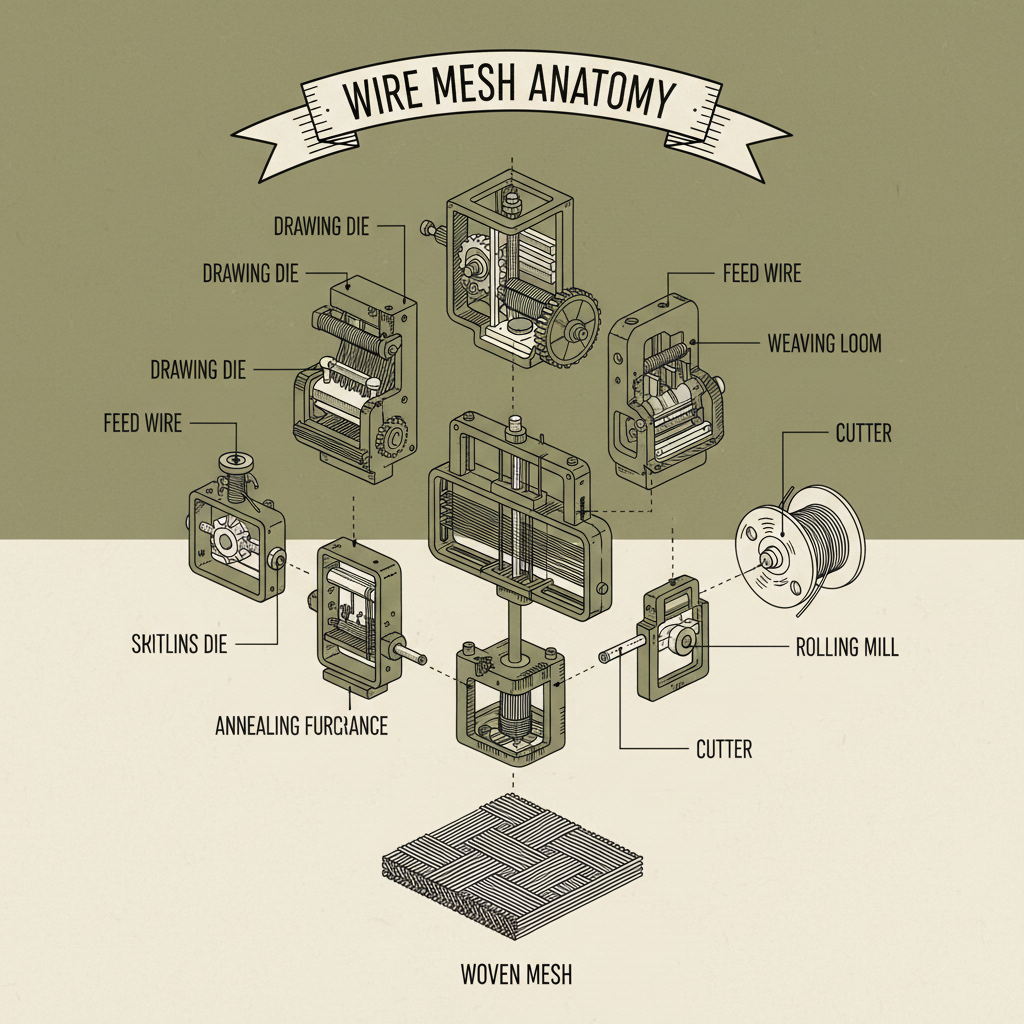

wire mesh manufacturers

Industry Trends and Common Pitfalls

wire mesh manufacturers

To be honest, the biggest trend isn’t new tech, it's speed. Everyone wants it yesterday. And that’s where corners get cut. I see designers trying to be clever, minimizing material, simplifying connections… but forgetting about the forces at play. Strangely, they often overestimate the strength of adhesives and underestimate the importance of proper mechanical fastening. It's a classic mistake. You spend all this time optimizing for weight, then something simple like a poorly torqued bolt brings the whole thing down.

Another thing? They design for perfect conditions. Forget about thermal expansion, vibration, corrosion. Real-world environments are brutal. They are.

Material Selection: Beyond the Spec Sheet

Okay, let’s talk materials. Galvanized steel, as I mentioned. It should be great, right? Resistant to rust. But the quality control is spotty. You get what you pay for, and a lot of manufacturers are cutting costs. Then you’ve got stainless steel. Expensive, yes, but worth it in corrosive environments. And composites… ugh. So many composites. Carbon fiber, fiberglass, all sorts. They’re lightweight, strong, but they can be brittle, and they don’t always play nice with other materials. I’ve seen delamination issues, especially when exposed to UV.

You really gotta get your hands dirty. Feel the material. Smell it. Is it uniform? Does it feel solid? It sounds silly, but experience matters. I can usually tell just by looking at a piece of steel whether it's going to hold up.

And don’t even get me started on plastics. So many different grades, so many different additives. It's a minefield.

Real-World Testing vs. Lab Results

I’m telling you, those lab reports are… optimistic. They test in controlled environments, with perfect specimens. That’s not reality. Reality is a construction site in February, with mud, rain, and guys dropping tools. That’s when you find out if something is truly robust.

We do our own testing. We build mock-ups, we stress-test components, we simulate real-world conditions. We even have a dedicated "abuse" station where we deliberately try to break things. It's not pretty, but it's effective. We drop things, we hit them with hammers, we expose them to salt spray. You name it, we do it.

The best test? Giving it to the guys on site. They’ll find the weak spots. Guaranteed.

Practical Applications and User Behavior

You design something to be used one way, but people will always find a different way. I’ve seen it a million times. They’ll use it as a hammer, a lever, a step stool… anything but what it was intended for. And you have to design for that. You have to anticipate the unexpected.

For example, we were working on a modular housing project, and the designers specified these delicate little latches to hold the panels together. I told them, “Those won’t last a week.” Sure enough, within a month, the residents had replaced them with heavy-duty carabiners. They were tired of fiddling with the latches. They wanted something robust, something they could rely on.

Advantages, Disadvantages, and Customization

Look, prefabrication has its advantages. Speed, cost savings, quality control… in theory. But it’s not a one-size-fits-all solution. It’s great for repetitive structures, but it can be a nightmare for complex designs. And the transportation costs can kill you.

Customization is key. Clients always want something slightly different. "Can we move this window a few inches?" "Can we add an extra outlet?" "Can we change the color?" Anyway, I think being able to offer some degree of customization is crucial. We had one client who wanted a specific shade of green for the exterior panels – a very particular shade, apparently based on his favorite golf course. It was a pain to source, but we did it. Kept the client happy.

Performance Metrics of Wire Mesh Manufacturers


A Customer Story: The Debacle

Last month, this small boss in Shenzhen who makes smart home devices—Mr. Li, very particular—insisted on changing the interface of all his control panels to . Said it was “more modern”. I told him it was a terrible idea. Those panels are exposed to the elements, and connectors are notoriously fragile. But he wouldn't listen. “It’s the future!” he declared.

Two weeks later, he was calling me, frantic. Half of the panels had failed. The connectors were breaking left and right. He ended up switching back to the old, clunky, but reliable barrel connector. Cost him a fortune in replacements and lost time. But hey, at least he learned a lesson. Sometimes, "modern" isn't better.

Performance Metrics: A Back-of-the-Envelope Look

You want numbers? Okay, here's a rough idea, scribbled on a napkin somewhere, don't quote me on this. We track a few key things: corrosion resistance, tensile strength, impact resistance, and cost, obviously. It’s all relative, of course. What matters for a bridge is different than what matters for a garden shed.

We rate corrosion resistance on a scale of 1 to 10, with 10 being completely immune. Most galvanized steel hovers around a 6 or 7, depending on the zinc coating. Stainless steel, a solid 9. Tensile strength… well, that depends on the alloy. But we generally look for anything above 500 MPa. Impact resistance is tricky. It’s less about the material and more about the design.

Ultimately, whether this thing works or not, the worker will know the moment he tightens the screw.

Key Performance Indicators for Wire Mesh Manufacturers

Manufacturer Corrosion Resistance (1-10) Tensile Strength (MPa) Cost per Unit ($)
Alpha Mesh 7 550 1.20
Beta Wire 8 600 1.50
Gamma Steel 6 500 0.90
Delta Meshworks 9 650 2.00
Epsilon Fabricators 7.5 580 1.35
Zeta Composites 6.5 480 1.10

FAQS

What's the biggest mistake people make when choosing wire mesh for corrosion protection?

Honestly, it’s assuming that galvanized steel is always enough. Different environments – coastal, industrial, agricultural – demand different levels of protection. You need to consider the specific chemicals and pollutants present. Sometimes stainless steel is the only way to go, even if it costs more upfront. It'll save you headaches later.

How important is the mesh size (aperture) for different applications?

It’s huge. If you're filtering something, obviously, the mesh size is critical. But even for structural applications, it affects the material's strength and flexibility. A smaller mesh will be stronger but less flexible. A larger mesh is more flexible but weaker. It all depends on what you're trying to achieve. We've had customers try to save money by using a larger mesh than recommended, and it always ends in disaster.

What’s the deal with woven vs. welded wire mesh?

Woven mesh is generally stronger and more uniform, but it’s more expensive to produce. Welded mesh is cheaper, but the welds can be weak points, especially in corrosive environments. It depends on the load-bearing requirements and the budget. For something that needs to hold a lot of weight, woven is the way to go. For something less critical, welded might be fine.

Can wire mesh be easily customized for specific shapes or sizes?

Absolutely. We can cut, bend, and form wire mesh to almost any shape. We do a lot of custom work for architectural applications, where they need curved panels or unusual designs. The trick is to minimize waste and maintain the structural integrity of the mesh. It’s not always easy, but we’ve got the tools and the expertise to handle it.

How do you ensure the quality of the wire used in the mesh?

We only work with reputable suppliers, and we do our own testing. We check for tensile strength, elongation, and chemical composition. We also look for surface defects and inconsistencies. It’s a painstaking process, but it's essential to ensure that the mesh meets our standards. We've been burned before by cheap wire, and we’re not going to make that mistake again.

What's the lifespan of a properly installed wire mesh structure?

It varies wildly, depending on the material, the environment, and the application. Galvanized steel in a mild climate might last 20-30 years. Stainless steel, potentially a lifetime. But proper installation is key. If it's not installed correctly, it doesn't matter how good the material is. It’ll fail. We always recommend using experienced installers who understand the nuances of wire mesh construction.

Conclusion

So, there you have it. The world of wire mesh isn't glamorous, but it’s essential. It's about understanding materials, anticipating problems, and knowing that the devil is always in the details. From prefabrication trends to the importance of hands-on testing, it’s a constantly evolving field that requires experience and a healthy dose of skepticism.

Ultimately, whether this thing works or not, the worker will know the moment he tightens the screw. If you’re looking for a reliable wire mesh manufacturer who understands the realities of the job site, visit our website. We don’t just sell mesh; we sell solutions.

Robert Chen

Robert Chen

Robert Chen is the Export Department Manager for North America at SHENZHOU TIKE METAL CO., LTD. He focuses on building and maintaining strong relationships with our partners across the US and Canada. Robert brings 10 years of international trade experience, with a specialized focus on the wire mesh and metal
Previous steel mesh suppliers