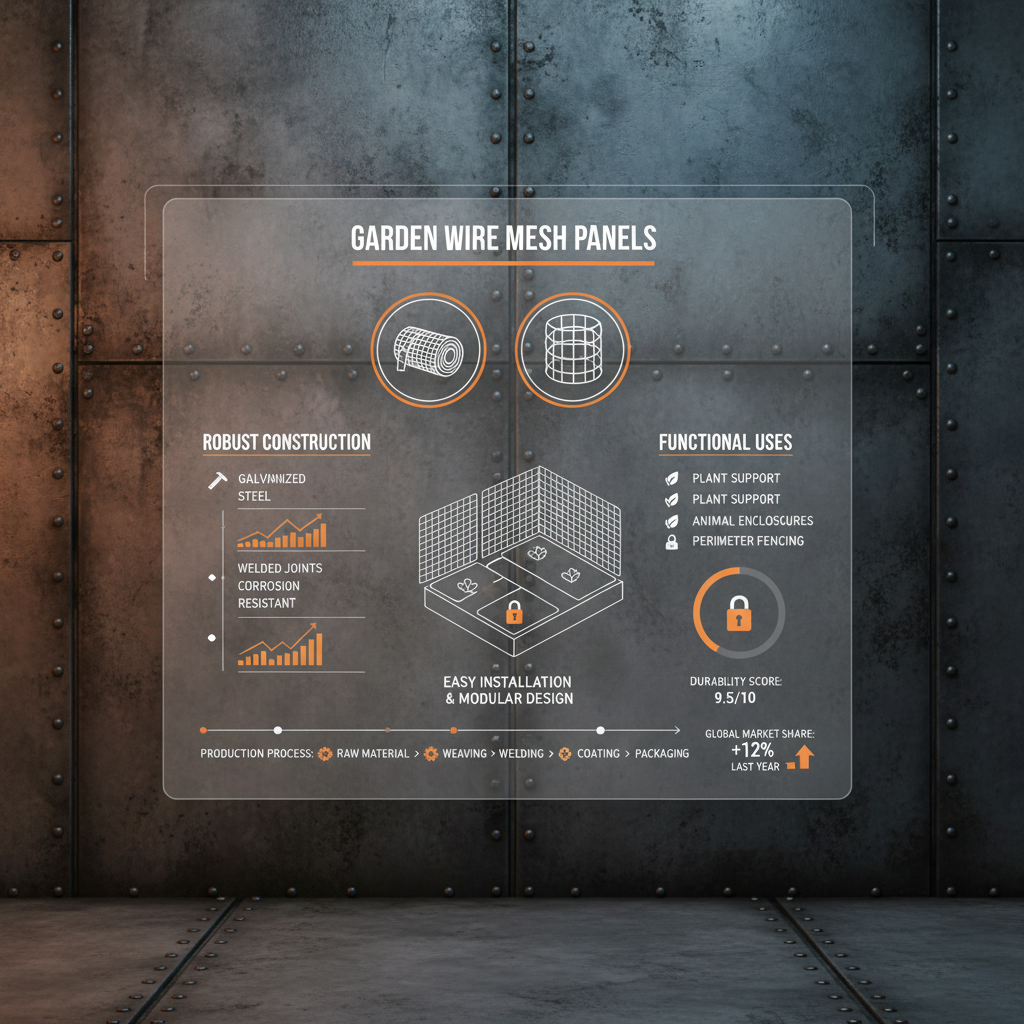
The industrial landscape for precision filtration and safety screening has been significantly shaped by the development of specialized wire fabrics. Among these, the 1 2 inch wire mesh serves as a critical component in various manufacturing and architectural applications, providing a balanced ratio of open area to structural integrity. Understanding the technical nuances of this mesh is essential for engineers and procurement specialists who require exact specifications for durability and permeability.
Globally, the demand for high-quality wire mesh is driven by the expansion of the construction, chemical, and agricultural sectors. From ensuring safety in industrial zones to providing precise filtration in liquid processing, the reliability of the weave determines the efficiency of the entire system. The adoption of international standards, such as ISO certifications for galvanization and tensile strength, has ensured that these products can withstand harsh environmental conditions across different continents.
When selecting the right material, professionals often look for a combination of corrosion resistance and specific aperture sizes. For those seeking a reliable solution, the 1 2 inch wire mesh offers a versatile configuration that meets a wide array of technical requirements, ensuring long-term performance and cost-effectiveness in demanding industrial environments.
Global Industrial Relevance of 1 2 inch wire mesh
The global utility of 1 2 inch wire mesh extends far beyond simple fencing. In modern industrialization, the ability to control particle size and provide secure structural reinforcement is paramount. Whether it is used in the mining sector for screening minerals or in urban architecture for safety barriers, this specific mesh size provides a critical intersection of visibility and protection, making it a staple in global supply chains.
From a macroeconomic perspective, the standardization of these wire products allows for seamless integration into prefabricated modules. This efficiency is particularly evident in the rapid deployment of infrastructure in emerging markets, where durable, galvanized materials are required to resist local climatic stressors while maintaining low maintenance costs over a twenty-year lifecycle.
Technical Definition and Material Composition
At its core, 1 2 inch wire mesh is a woven or welded fabric made from metal wires, characterized by its specific aperture size and wire gauge. Depending on the application, the weave type can vary; for instance, products may be galvanized before weaving for maximum internal protection, galvanized after weaving for superior surface coverage, or PVC coated for enhanced chemical resistance and aesthetics.
The structural integrity of the mesh is further defined by its selvage types. Options such as Returned Selvage, Flash/Open Selvage, and Closed/Welded Selvage allow engineers to choose how the mesh edges behave under tension. This ensures that the fabric does not unravel during installation, which is critical for safety-sensitive applications like architectural cladding or industrial filtering.
Materiality plays a huge role in performance. By utilizing high-grade steel and precision galvanization, the mesh is engineered to prevent oxidation. This technical composition ensures that the opening sizes—ranging from micron-level precision to larger gaps—remain consistent across the entire roll or panel, ensuring a predictable flow rate or security level.
Core Components of Mesh Performance
Durability is the primary driver when selecting 1 2 inch wire mesh. The combination of wire diameter and the quality of the galvanization determines how the product reacts to corrosive environments. For instance, a thicker wire gauge provides higher impact resistance, while a high-quality zinc coating prevents rust in humid or salty coastal regions.
Scalability and customization are equally important. Because 1 2 inch wire mesh can be manufactured in various mesh counts per inch—such as 8, 10, or 20—it can be tailored to specific open area percentages. This flexibility allows the mesh to be used for everything from coarse debris filtering to fine-grained material separation.
Cost efficiency is realized through the optimization of the open area. By maximizing the percentage of open space without compromising the strength of the wire, manufacturers can reduce material weight while maintaining performance. This logical approach to design ensures that the mesh provides the necessary utility without unnecessary overhead in material costs.
Performance Metrics and Efficiency Analysis
Analyzing the efficiency of wire mesh requires a look at the relationship between the wire diameter and the open area. A higher mesh count generally leads to a smaller opening size, which increases the filtration precision but can reduce the overall flow rate. Balancing these parameters is essential for optimizing industrial throughput.
For professional applications, the performance of 1 2 inch wire mesh is often rated based on its tensile strength and the uniformity of its apertures. When the open area is precisely controlled, the mesh can handle higher pressures and loads, which is why specific specifications for micron size and millimeter opening are provided to ensure absolute accuracy in high-stakes environments.
Efficiency Ratings of Various 1 2 inch wire mesh Configurations
Real-World Global Applications
In industrial zones, 1 2 inch wire mesh is frequently utilized for the creation of safety cages and heavy-duty partitions. In regions with high humidity, such as Southeast Asia, the PVC-coated variants are preferred to prevent rapid corrosion, ensuring that safety barriers remain intact for decades without requiring frequent replacement.
Beyond safety, the mesh is indispensable in the agricultural sector for livestock containment and crop protection. In the Americas and Europe, customized mesh panels are used to create secure enclosures that are both breathable and sturdy, providing a cost-effective way to manage large areas of land while protecting assets from external threats.
Long-Term Value and Sustainability
The long-term value of investing in premium 1 2 inch wire mesh lies in its lifecycle cost. While lower-grade alternatives may be cheaper upfront, they often fail prematurely due to rust or structural fatigue. High-quality galvanized mesh reduces the total cost of ownership by eliminating the need for frequent painting or structural repairs.
Sustainability is also a key factor. Metal mesh is inherently recyclable, meaning that at the end of its service life, the steel can be reclaimed and repurposed. This aligns with global green building initiatives and ISO environmental standards, reducing the carbon footprint of large-scale infrastructure projects.
Moreover, the reliability of these materials fosters trust between contractors and clients. When a safety barrier or filtration system is guaranteed to last, it ensures the safety and dignity of the workforce, promoting a stable and innovative industrial environment where operational downtime is minimized.
Future Innovations in Wire Mesh Technology
The future of 1 2 inch wire mesh is being shaped by the integration of smart materials and automated manufacturing. We are seeing a move toward alloys that offer even higher strength-to-weight ratios, allowing for thinner wires that provide the same security as thicker, heavier alternatives. This reduction in weight simplifies transport and installation.
Digital transformation in the factory is also allowing for "precision-on-demand" customization. Using advanced CNC weaving and welding technology, manufacturers can now produce mesh with varying aperture sizes within a single panel, optimizing the mesh for specific gradients of filtration or security needs.
As the world shifts toward sustainable energy, these meshes are finding new roles in the construction of battery enclosures and hydrogen storage safety frames. The ability to customize coating and metallurgy ensures that the mesh can resist the specific chemical challenges of the next generation of energy infrastructure.
Technical Comparison of Wire Mesh Specifications
| Mesh Count |
Wire Diameter (mm) |
Opening Size (mm) |
Open Area (%) |
| 8 Mesh |
0.711 |
2.464 |
60.2 |
| 10 Mesh |
0.635 |
1.905 |
56.3 |
| 14 Mesh |
0.508 |
1.306 |
51.8 |
| 20 Mesh |
0.406 |
0.864 |
46.2 |
| 30 Mesh |
0.330 |
0.516 |
17.2 |
| 60 Mesh |
0.1905 |
0.2328 |
30.3 |
FAQS
For coastal environments with high salinity, PVC coating after weaving is highly recommended. This provides a non-porous plastic barrier that completely seals the metal from salt air, significantly extending the product's life compared to standard galvanization.
The mesh count refers to the number of openings per linear inch. For coarser filtration, a lower count (e.g., 8 or 10) is ideal. For finer particles, you should move toward higher counts like 40 or 60, which offer smaller micron sizes and lower open area percentages.
Galvanized before weaving ensures the wire core is protected, but the weave intersections may have slight gaps in coating. Galvanized after weaving covers the entire finished mesh, including the joints, providing superior overall corrosion resistance.
Yes, most professional manufacturers allow for complete customization of materials, wire diameters, and aperture sizes. Whether you need a specific roll width or custom-welded panels, specifications can be tailored to fit your project's exact blueprints.
Closed or Welded Selvage is best for high-tension applications. Because the edges are fused or folded back and welded, the mesh is far less likely to fray or pull apart when stretched across a frame or fence post.
Depending on the order, we provide waterproof paper with plastic film, wooden pallets, iron pallets, or carton boxes. This ensures the mesh arrives without deformation or oxidation regardless of the shipping distance or duration.
Conclusion
The selection of high-quality 1 2 inch wire mesh is a fundamental decision that impacts the safety, efficiency, and longevity of industrial and architectural projects. By carefully considering the interplay between mesh count, wire diameter, and coating types, professionals can secure a product that not only meets current operational needs but also stands up to the environmental challenges of the future. From precision filtration to robust security barriers, the technical versatility of these metal fabrics ensures they remain an essential asset in global manufacturing.
Looking ahead, the trend toward smarter, more sustainable materials will continue to refine the application of wire mesh technology. We encourage engineers and project managers to prioritize materials that offer a balance of recycled content and high-performance durability. For those seeking a partner in precision wire products, we invite you to explore our full range of specifications. Visit our website: www.tikemetal.com